Saturday, November 12, 2016

From beast to beauty: How Luis Suarez curbed his anger issues

From beast to beauty: How Luis Suarez curbed his anger issues


The Uruguayan, who was second in the 2016 Goal 50, was made to wait for his Barca debut because of his ban for biting Giorgio Chiellini but he has cleaned up his act


GOAL 50 SPECIAL REPORT  

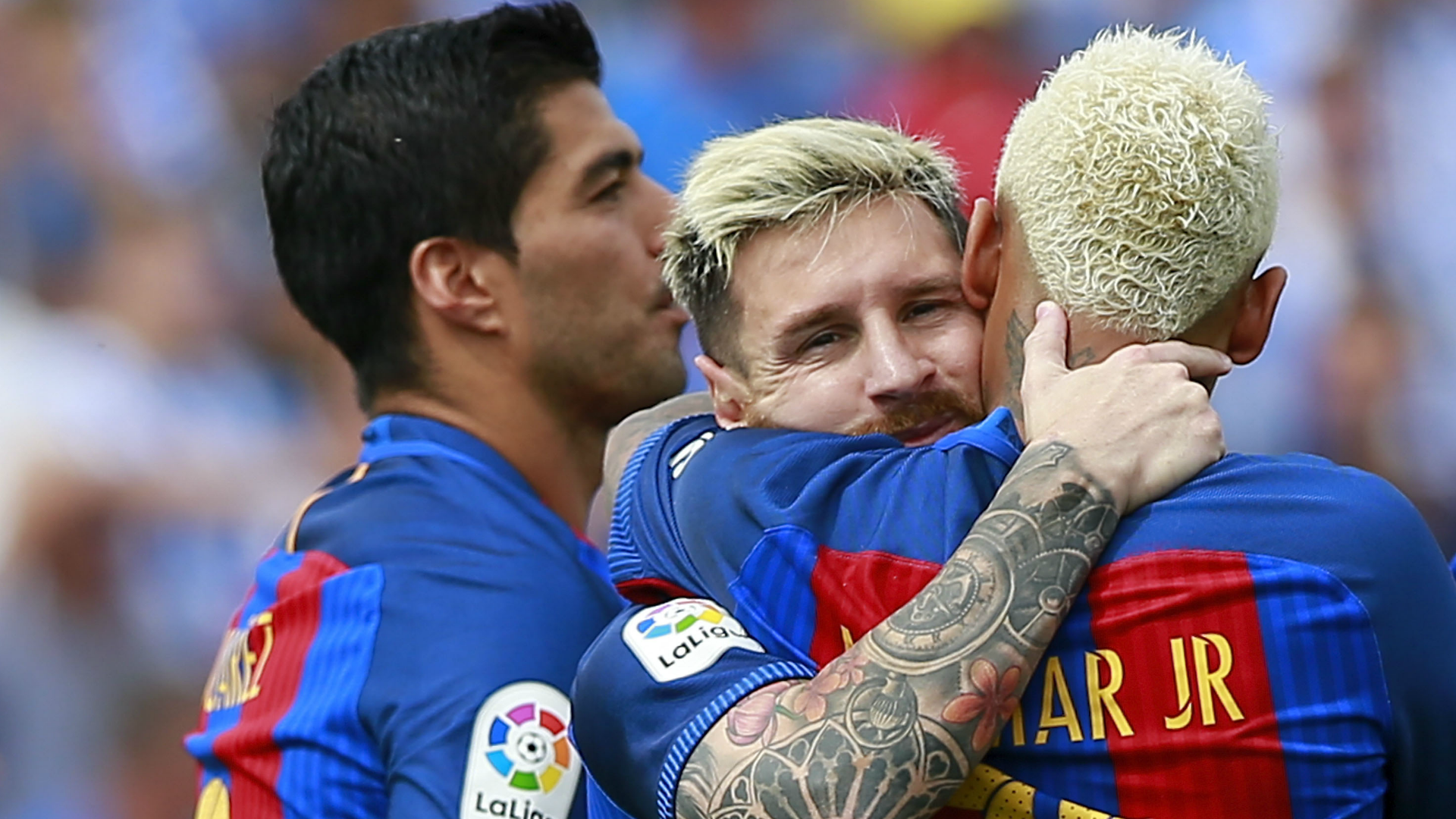
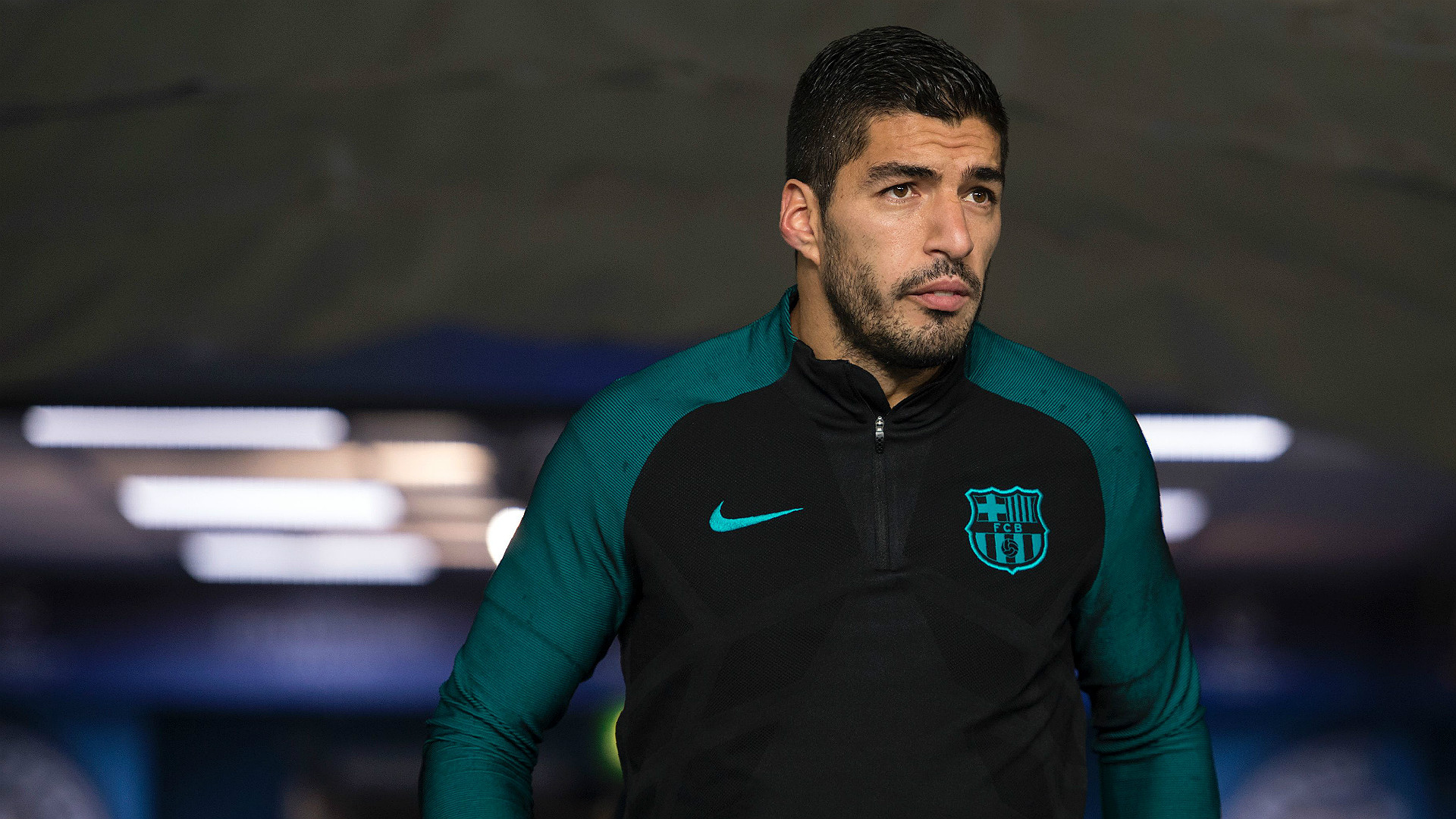
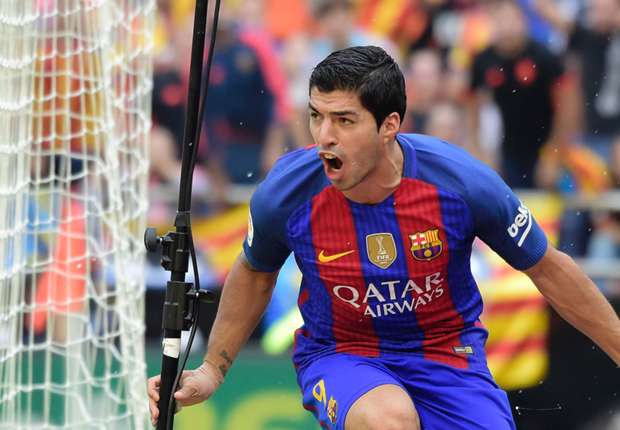
Luis Suarez has not looked back since joining Barcelona. The Uruguay forward won the treble in his debut campaign at the Catalan club and completed a domestic double in his second season, forming a tremendous trident with Lionel Messi and Neymar which saw him bag an incredible 59 goals in all competitions.
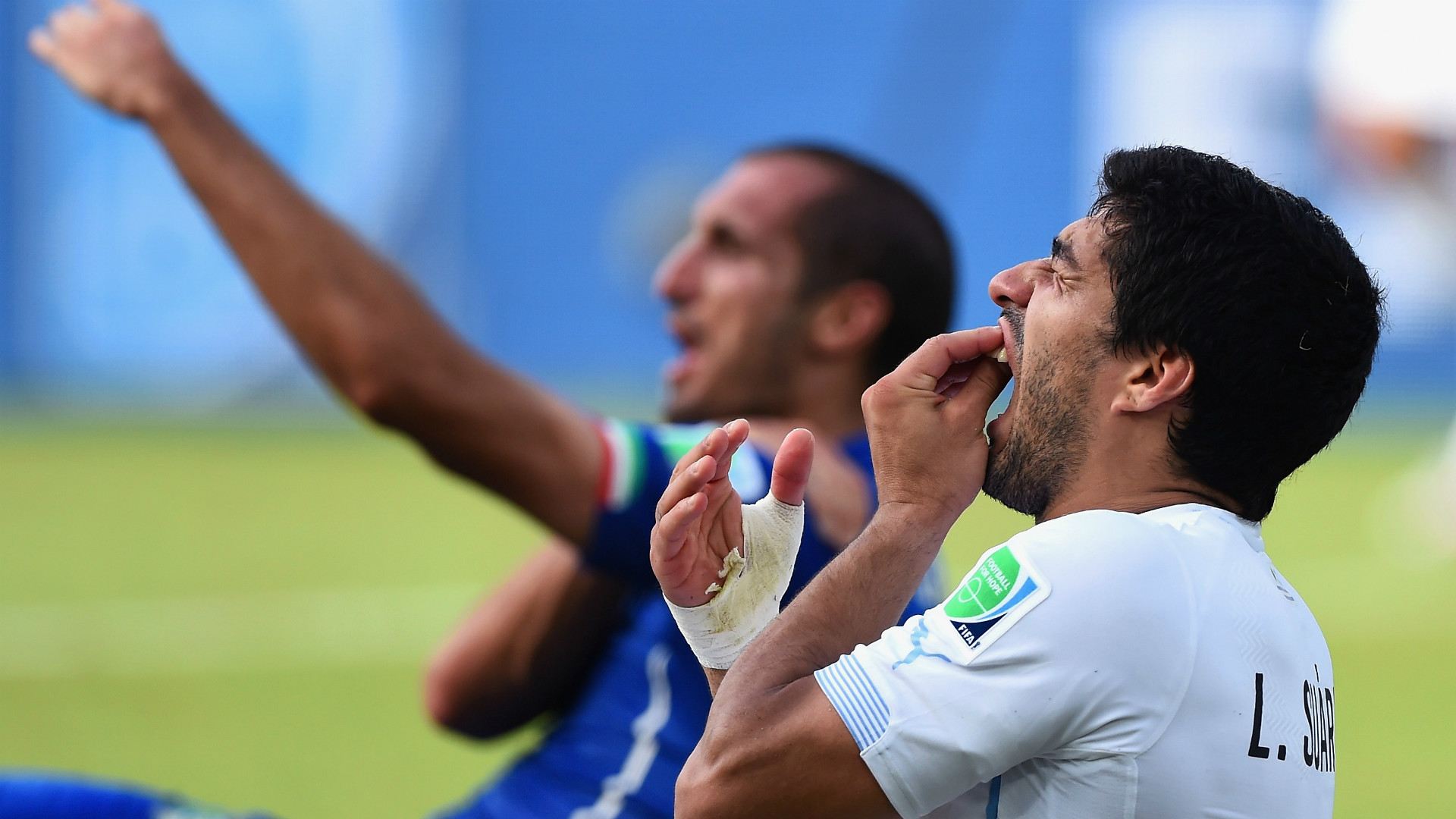
However, life at Barca was difficult to begin with after the striker's €81 million move from Liverpool. That was because, during the World Cup in Brazil, Suarez bit Italy defender Giorgio Chiellini and was subsequently banned by FIFA for four months.
It meant he was forced to sit out the first two months of the season in Spain and could not turn out for Barca's B team either. When he finally featured in a warm-up match ahead of his competitive debut, a 3-1 Clasico defeat at Real Madrid, he was hit with headlines claiming he was overweight and out of shape.
On top of that, there was intense scrutiny over the striker's anger issues. Could he keep himself in check? Should Barcelona have signed someone else? It would be just a matter of time, some said, until another incident occurred.
"I was treated worse than a hooligan," Suarez said of the FIFA ban. "Because banning someone from a football match, a training session, is just incomprehensible.
"Four months without being able to play a competitive game and a two-year international ban is too much. It just doesn't make sense. It's almost worse than if I had failed a doping test."
During his enforced exile, Suarez spent time thinking about his actions and his wife was a huge support. Together since adolescence, Sofia had helped Luis even back then. "She helped me to correct myself, she helped me realise who my friends were," he said in an interview ahead of the World Cup.
Suarez had travelled often to Barcelona from Uruguay and also as a Groningen player to visit Sofia, who had moved from South America to the Catalan capital with her parents, before the two lived together in the Netherlands and later married in 2009. So, when he arrived at Camp Nou in 2014, it already felt like home. Luis knew Barcelona well, was surrounded by more family than at Liverpool, while he also developed close friendships with Messi, Neymar, Javier Mascherano and Andres Iniesta.
However, again, it was Sofia who was his principal pillar of support - although initially he had lied to his wife after the biting incident. “On the day of the game I phoned him and asked what he had done," she said. "He responded with ‘What?’ The same had happened in England and I insisted: ‘Again?’ He replied: ‘I haven’t done anything. Are you not happy because Uruguay qualified?’"
After the ban, however, and days of soul-searching, Suarez eventually opened up to Sofia.
“I didn’t ask for immediate forgiveness as I didn’t want to believe what had happened,” he said. “It took a few days because I didn’t want to believe the reality. I was in Uruguay, having gone there after the World Cup, and people were coming up to my door. I appreciated the support but wanted to be supporting my team-mates on the pitch.
"I had given everything for four years to be there and through my own fault, making one mistake, all that was forgotten. How I was treated was a bit cruel. I was treated like a criminal and it hurt."
However, Barcelona was a new start. He vowed to improve his behaviour for the sake of his family (his wife and two young children) and even though there have been one or two cases of aggression in Spain, there has been nothing as serious as the bites on Chiellini, Otmann Bakkal (during his time at Ajax) and Branislav Ivanovic (while at Liverpool).
In his spell at Anfield, Suarez was also found guilty of racially abusing Patrice Evra and the Uruguayan came to feel persecuted by the paparazzi in England, while his only close friend in Liverpool was Steven Gerrard.

At Barca, he has the support network he needs, including several other South Americans, and the move was a clean break. Thanks to Messi, Neymar, Mascherano and Iniesta, the continued help of his family and his own will to steer clear of trouble, it is a much more mature Luis Suarez these days.

Hotline near thing! Griezmann would have won Ballon d'Or & Goal 50 if...

The Atletico Madrid and France ace enjoyed a fine year but came up just short when it mattered and that cost him top spot in our list of the game's top talents


GOAL 50

When Antoine Griezmann finally hangs up his boots, he may reflect upon 2016 as the year that might have been.
The Frenchman came within a penalty shootout of winning the Champions League with Atletico Madrid and just the width of a post from being remembered as a winner of Euro 2016 as opposed to its unlucky loser. Instead, Diego Simeone’s men fell to city rivals Real and Eder won the European Championship in extra-time after Andre-Pierre Gignac had struck the upright for France.
Football is a game of 90 minutes decided by incidents that last a moment and, on the very biggest stage, Griezmann was on the wrong end of those moments. Cristiano Ronaldo, on the other hand, is the master of stealing the spotlight – and that is why the Portuguese is the winner of the 2016 Goal 50 and Griezmann placed third.
However, that should not detract from a year in which the Macon native burst onto the world scene, probably to remain at the peak of the game for the remainder of his career. He has enjoyed 12 months of almost unremitting brilliance, although his failure to convert a penalty during normal time in the Champions League final or lead Les Bleus to European glory is something that threatens to haunt him.
“After the final of the Euros, I had a difficult week thinking about the final of the Champions League and the European Championship,” he admitted to Goal, though there should be no sense of shame at twice falling at the final hurdle.
He has provided elegance to an Atletico Madrid side more noted for its brashness, netting 27 times for the Vicente Calderon outfit over the course of the last year, including a burst of seven successive Liga matches – a run the type of which is only associated with an elite handful.
The contribution he has made for his club side has been immense as he has provided the silken touch in attack to complement that team’s well-organised defensive line. Head coach Diego Simeone is certainly not ready to play down his star player’s achievements.
“For me, last year Griezmann was the best player in Europe, I have no doubt about what I say," the Argentine said in September. “He reached the finals of both the Champions League and Euro 2016, scoring many goals, and scored many goals in La Liga too. The consistency he has makes him stronger. I hope he is up there for the Ballon d'Or, as he is in great form, and will get even better if he continues like this.”
The attacker’s multi-dimensional talents were most impressively showcased when Atleti had their backs to the wall in the Champions League against Barcelona – a quality that Simeone would no doubt have appreciated. Indeed, for all of his technical talents, his industry, tenacity and efficiency are all of the mental hallmarks the Argentine demands.
Trailing 2-1 from the first leg in Catalunya, the Frenchman turned in a virtuoso display at Vicente Calderon to turn the tie in Atleti's favour. Playing as a second striker, where all his talents are best exploited, he linked play superbly for his side but showed a clinical edge that carried his side through to the semis.
He might only stand at 1.76 metres tall, yet there are few better players in the air. Barca learned this to their cost when he headed home a Saul Niguez cross to give them the lead on that April evening before securing Atleti’s place in the last four by squeezing home a late penalty.
Of course, he was to be the decisive factor in the last four against Bayern Munich, with his goal at the Allianz Arena enough to carry Atleti into the final.
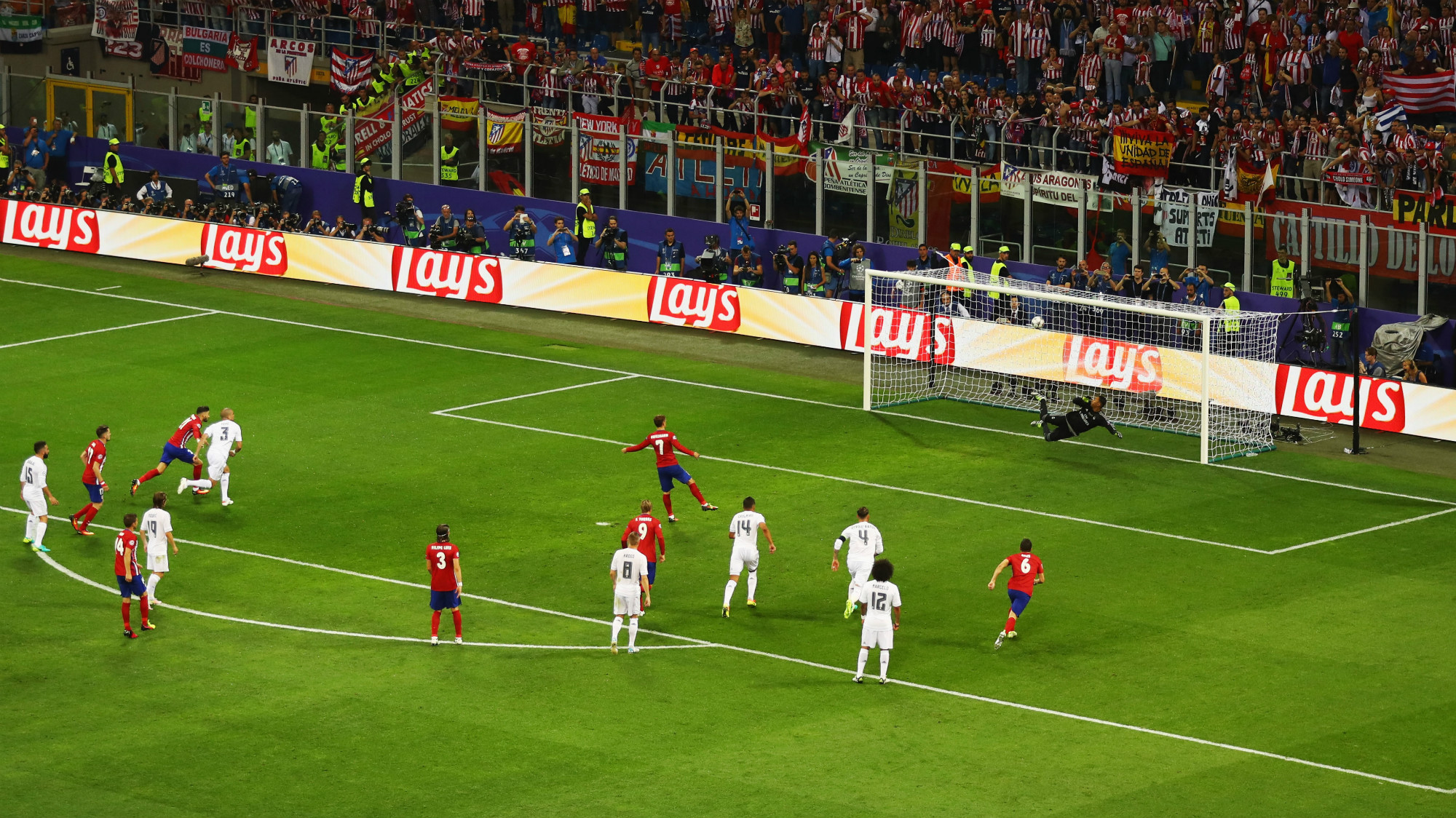
At San Siro, Simeone’s men stumbled having recovered from a goal down, with Griezmann on this occasion coming up short from the penalty spot in normal time as his effort cannoned off the underside of the bar. He made amends by showing terrific bravery to score in the eventual penalty shootout but Ronaldo, whose overall display had been far less impressive than that of his French rival, stole the headlines by waiting until the last to convert the winner.
It was a prime example of the Portuguese’s unerring ability to seize the moment at the most decisive time and is the one area Griezmann must look to improve in 2017. Happily, he has the drive to do so. 
“It’s good to be as high in the classification as third,” he said. “I hope to be second next year and first in two years.
“Cristiano Ronaldo and Lionel Messi are two monsters, two legends. In 10 years, the world will say that no-one will ever be able to equal them. I’m going to try and get as close as possible and to continue to raise my level each year to become the best player possible.”
The Frenchman, though, has shown he can excel on two fronts. During the summer, he transformed into a superhero in his homeland as Griezmann became ‘Griezou’ for a month as he spearheaded France’s ultimately unsuccessful push to win Euro 2016.
Although it was Dimitri Payet who stole the spotlight on the opening night with a stunning winner against Romania, the tournament was ultimately dominated by the team's 25-year-old forward, and had France beaten Portugal in the final, then he would have gone down in history, mentioned in the same breath as Michel Platini and Zinedine Zidane, the two undoubted doyens of the game in l’Hexagone.
That kind of reverence may yet come, though, as he has shown the potential to be a leader for his national side like the greats of previous generations. 
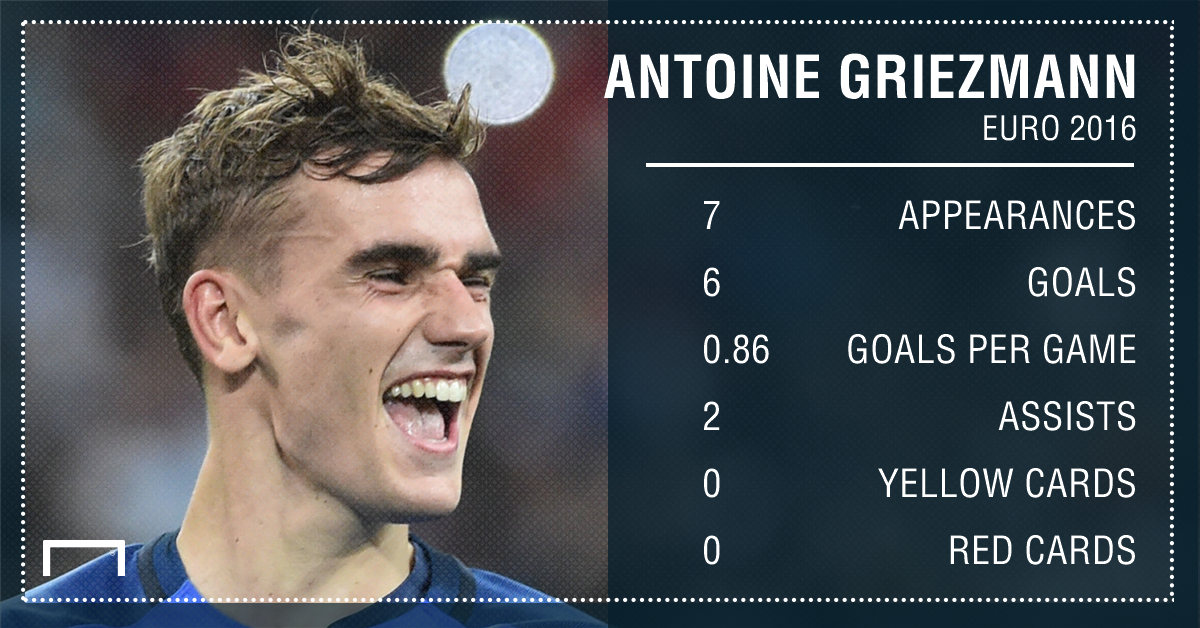
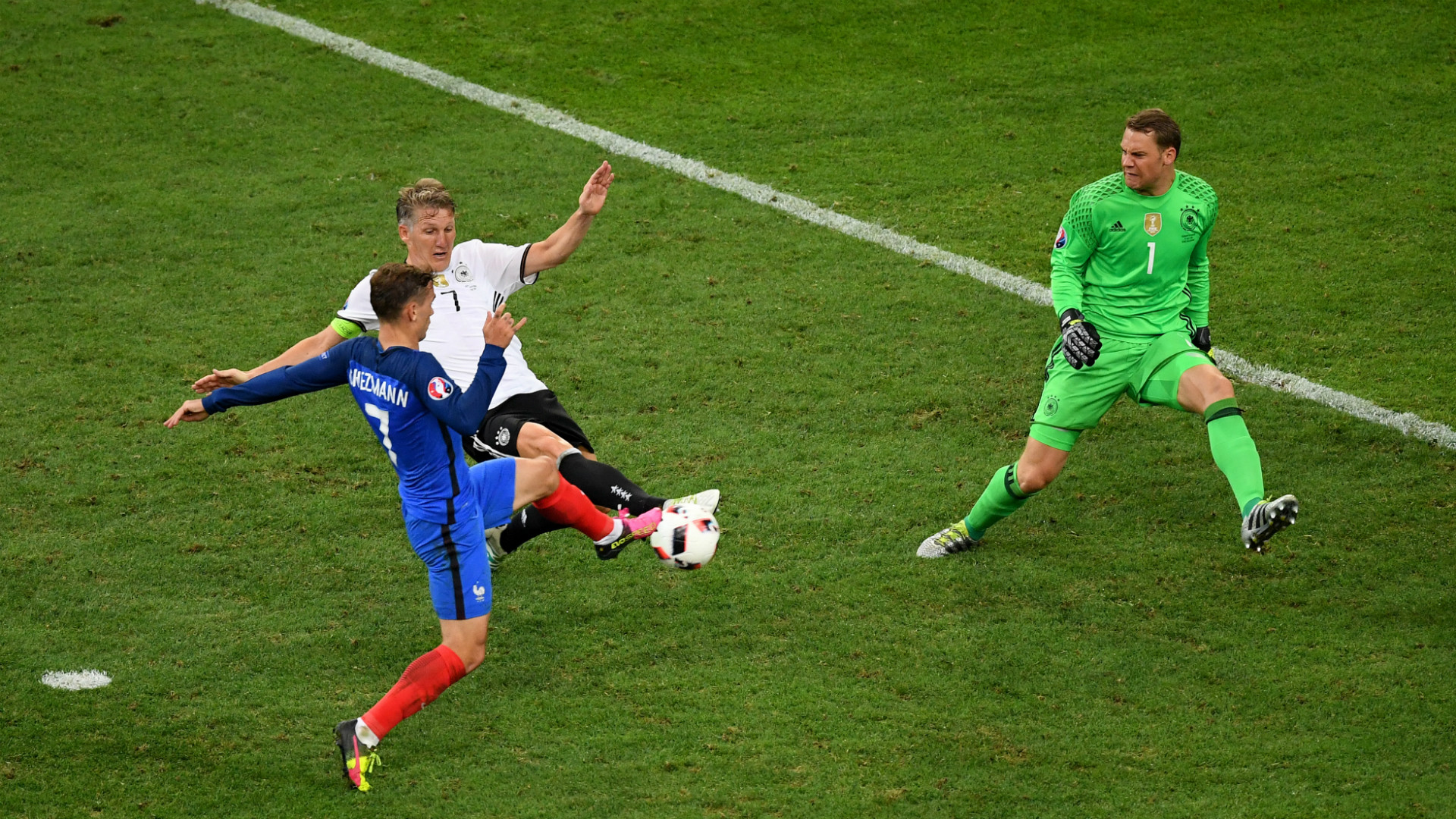
After a slow start at the Euros, he exploded into life at Marseille’s Stade Velodrome, where a late header carried a lethargic France to victory over Albania, sparking a dazzling run of form that saw him produce match-winning performances against Republic of Ireland and Germany during a run of five games in which he scored six times and clocked up a couple of assists.
With Ronaldo off injured in the final, the stage seemed set for a home victory reminiscent of Euro 84 and World Cup 98, but Fernando Santos’ Portugal were too defensively astute and pinched victory with a well-organised but phenomenally dour display that characterised their tournament. 
Griezmann would take home the Best Player prize, but the real glory would be Ronaldo’s. Even in his absence, this was – again – to be the Portuguese’s moment, with the Madrid striker defying knee ligament damage to stalk the touchline throughout, ensuring his fair share of the spotlight after a largely indifferent tournament.
After two such high-profile setbacks in the space of two months, it would be understandable if his level had dropped at the start of this term. There has been little sign of a hangover, though, with his recent double over FK Rostov highlighting just how formidable a finisher he has become. 
He is currently outperforming Ronaldo this season but the real test is likely to come in May. The Goal 50 winner was decisive at the key times last term and now Griezmann must learn from that to be decisive when it really, really matters. Then, he can realise his goal of becoming the world’s best player. 
Haters gonna hate but Goal 50 winner Cristiano Ronaldo still No. 1 even at 31

Haters gonna hate but Goal 50 winner Ronaldo is still No.1 at 31


The Portugal captain enjoyed the best year of his career in 2016 - laying waste to accusations that his powers are on the wane – as he picks up yet another major accolade
Rewind to the start of 2016 and Cristiano Ronaldo was humiliated, down and out, yesterday’s news, defeated.
Real Madrid had been smashed in El Clasico, Rafael Benitez sacked amid discord and Ronaldo – while scoring – was being accused of a failure to net against any worthy opponent.
Not only that but a certain Lionel Messi had beaten him to the Ballon d’Or – the Argentine’s fifth – and days later Ronaldo’s statue on his native Madeira was vandalised with MESSI 10 graffiti. It was – perhaps – the lowest point of the Real Madrid man’s career.
Barcelona were in control of La Liga. Real Madrid were uncertain of themselves. Ronaldo was frustrated as Real adapted to the Zinedine Zidane regime. He said they would be winning La Liga if his team mates were on the same level as he was. He walked out of one press conference when it was asked why he didn’t score more goals away from home. He faced accusations of coldness in his relationship with Gareth Bale – the most expensive player in the world and seen as a figure of jealousy in Ronaldo.
But he endured.
Things then started to click for Ronaldo under Zidane – the catalyst for his best-ever year. Ronaldo was out there every night giving more and more for supporters who scarcely deserved his efforts - given that they had taken to jeering him at Santiago Bernabeu.
He scored four against Celta Vigo and asked the crowd where the boos were now. He scored the winner in the season’s second Clasico while Messi began to flag.
It was Luis Suarez – not Messi (who finished fourth in the 2016 Goal 50) - leading Barca through choppy waters as Ronaldo and Real ate into their lead. Zidane and Ronaldo led their side to 12 wins in a row to end the season only one point behind Messi and Barca – who looked at one stage to be runaway leaders.
That momentum became vital – not only in Spain but in the Champions League too - and Ronaldo was becoming ever-more prominent. He ended up with 16 goals in the tournament overall, including a hat-trick in the quarter-final second leg against Wolfsburg to overturn the tie. In the round before, he scored the best goal of the season – a thundering drive against Roma. As Messi was running out of steam, Ronaldo was picking up a head of the stuff.
Even a thigh injury the week of the final was not enough to hold him back; he was there to ram home the decisive fifth penalty against Atletico at San Siro – thereby guaranteeing an 11th Champions League crown for la Real. While his topless celebration might have seemed over the top for a mere penalty in a shootout, it was the culmination of a hard season’s work. He deserved it; his moment after dragging his team through the knockouts.
Ronaldo scored 51 goals in 48 games for Real Madrid (and 44 goals in 49 games for club and country in the calendar year) – his sixth season in a row surpassing 50 goals - but went into Euro 2016 with doubts over his fitness. If Portugal were to stand any chance, Ronaldo would have to play through adversity. It wasn’t always easy; he lashed out – at reporters, at Iceland, at himself.
But again he persisted.
And record-breaking Ronaldo made history in France. He became Portugal’s all-time record appearance holder. He equalled Michel Platini’s European Championship goal-scoring record of nine. He became the first man to score in four Euro tournaments. Ronaldo was - ultimately - more responsible than anyone for delivering his nation a precious first senior international title.
He performed selflessly; playing in an unnatural position up front and sacrificing himself for the greater good. He hit three goals for the Silver Ball and assisted three more along the way.
He cajoled Joao Moutinho into taking a vital penalty in the quarters against Poland – demonstrating his class as a leader – and aimed a bullet header past Bale’s Wales in the semis.
Cometh the hour, cometh the man.
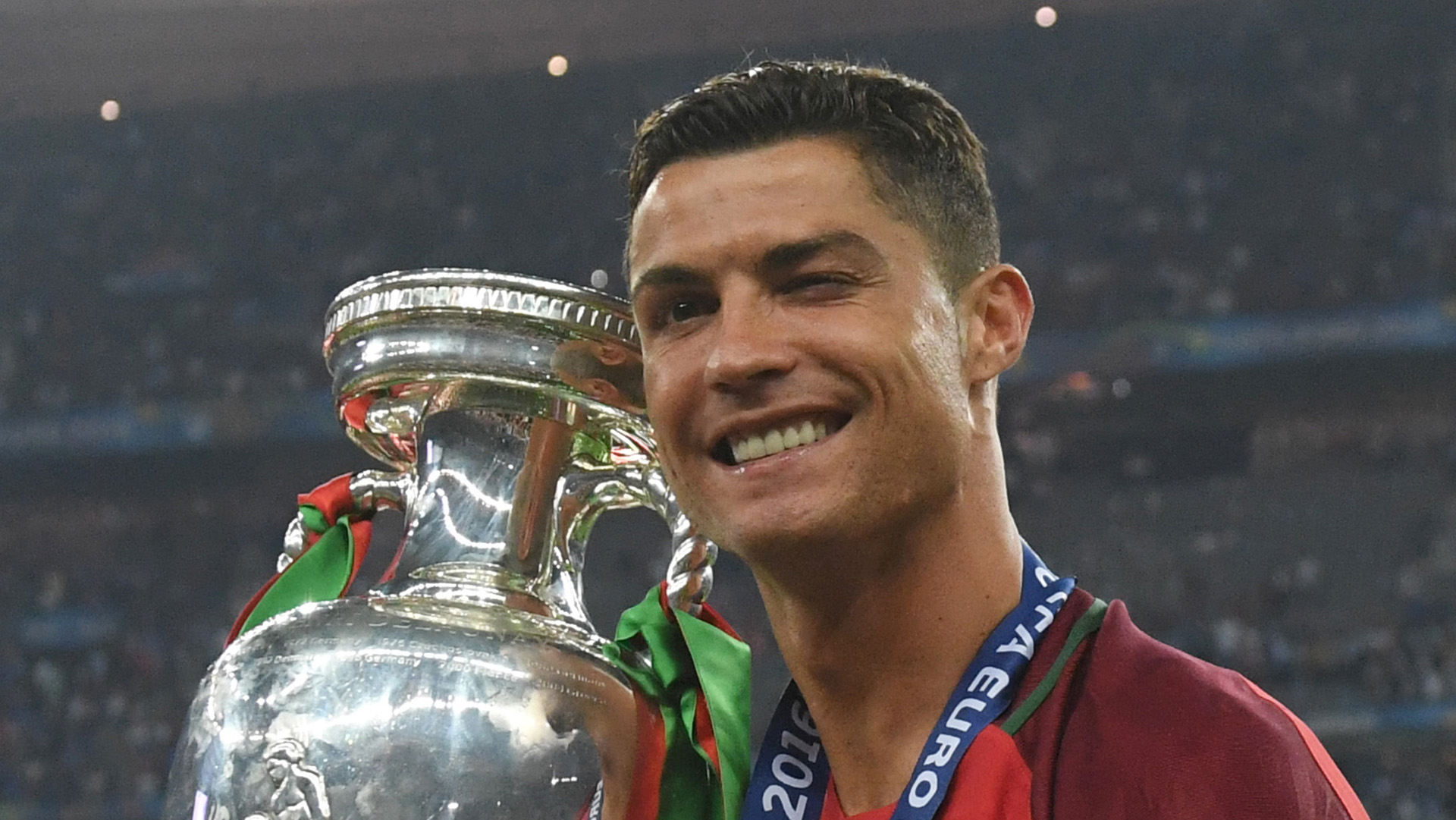
A debilitating knee injury after only 25 minutes of the final against France in Saint-Denis left Ronaldo in tears and unable to continue. He was there to the end, willing his colleagues on from the sidelines as best his stricken frame would allow. He had won plenty of matches for Portugal on his own; it was time for them to give something back. The pain and sacrifice was made all the sweeter as he lifted that famous old trophy over his head in the Stade de France.
“For me it’s an honour to receive this recognition again," Ronaldo said upon receiving the 2016 Goal 50 trophy.
"It’s not mine, but for all my team-mates at Madrid and in the national team. I feel very happy and very proud. My interpretation of this award is the same as throughout my career: that nothing is achieved without ambition, personal effort and without a team of colleagues and workers who support you day in, day out. That day to day is the most important thing.” 
That injury has naturally disrupted Ronaldo’s start to this new season. He missed the Uefa Super Cup in Norway and was admittedly slow to get going in La Liga. Messi’s sensational return to form makes it look illogical to put such a distance between the pair of them but it must be remembered just how effective Ronaldo was through the course of the year in comparison to the Argentine. Indeed, Messi was not even included on Uefa’s Best Player in Europe shortlist in August. Ronaldo won it and he will rightly lift the 2016 Ballon d’Or also.
His fitness has been a concern to his club – with a tantrum in Gran Canaria after Zidane saw fit to withdraw him – but there is no question that Ronaldo remains as big a threat as ever. Write him off at your peril. And if seven goals in 12 games is a slump then it tells you everything about how devastating Ronaldo has been this year.
“My objectives are to always be at my best physically and emotionally in order to give everything I can for the team," he said. "My goal is to keep giving my very best to my coach and my team-mates.”

He has been rewarded at the age of 31 with a fresh five-year Real Madrid contract, demonstrating that the club thinks there is plenty left in the tank. Ronaldo did not play well every night in 2016 but did more than most to ensure a record-breaking year for club and country and enjoyed his best ever season. Messi may have more goals, more titles and even more natural talent but Goal 50 winner Ronaldo has had a superior year by far.
He’s made his moments count. Now it’s Ronaldo back on the top of the world.